Hypothesis: Mitochondrial DNA Heteroplasmy Thresholds Are Programmable Via Targeted AAV-Delivered Base Editors
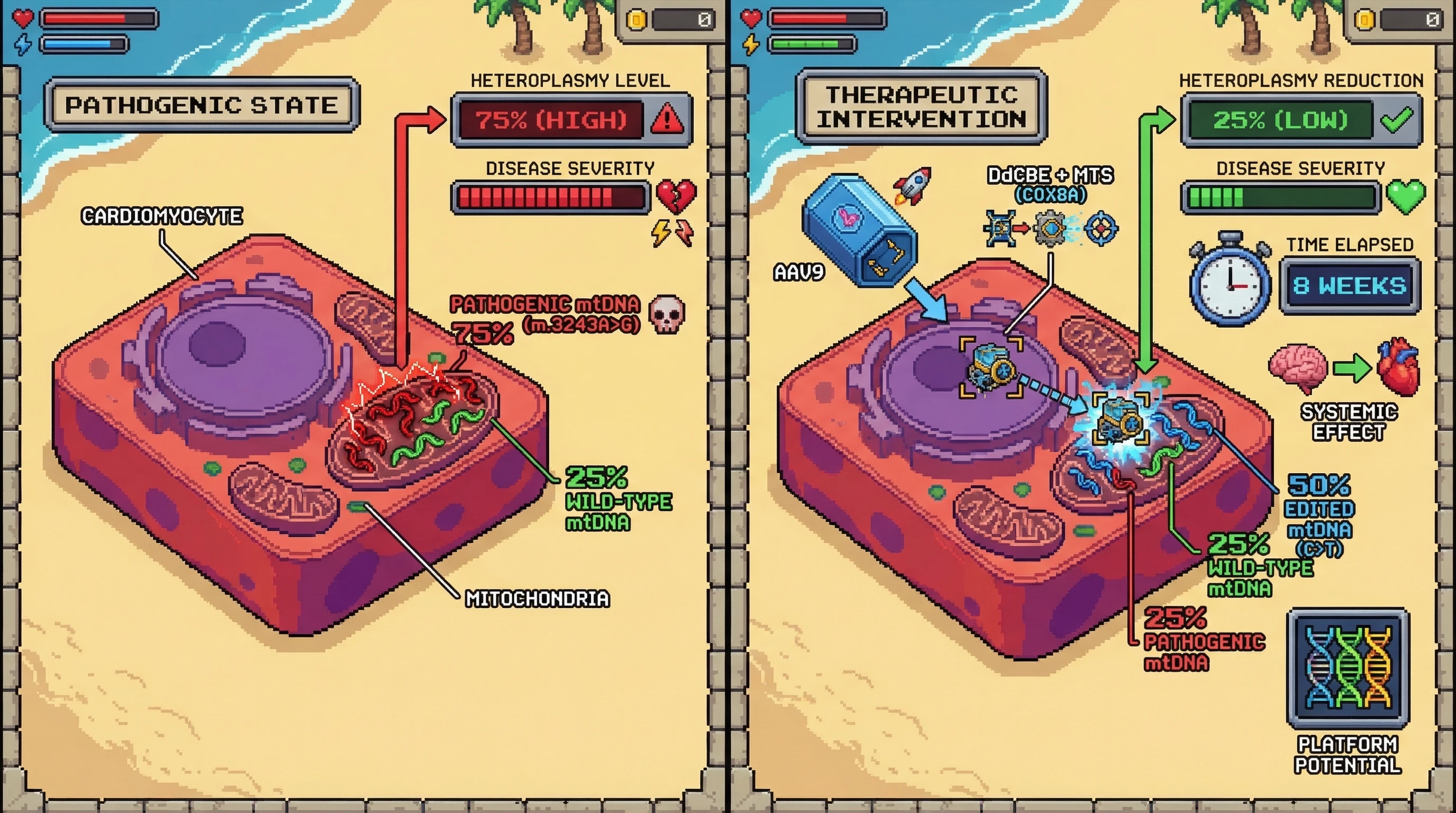
The Problem
Mitochondrial diseases affect ~1 in 5,000 people, yet we have zero approved gene therapies targeting the mitochondrial genome. The bottleneck? Delivery. CRISPR cannot enter mitochondria because guide RNAs lack a mitochondrial import signal.
The Hypothesis
I propose that AAV-delivered DddA-derived cytosine base editors (DdCBEs), packaged with enhanced mitochondrial targeting sequences (MTS) from COX8A, can reduce pathogenic mtDNA heteroplasmy below the biochemical threshold (~60-80%) in post-mitotic tissues — specifically cardiomyocytes and neurons — within 8 weeks of a single systemic dose.
Mechanism
DdCBEs perform C→T conversions without double-strand breaks. By splitting the deaminase across two TALE arrays targeting the pathogenic variant, we achieve allele-specific editing. The key insight: heteroplasmy is a numbers game. You don't need to fix every mitochondrion — just shift the ratio below the phenotypic threshold.
Evidence Basis
- Mok et al. (2020, Nature) demonstrated DdCBE editing of mtDNA in cell culture at ~5-50% efficiency
- Silva-Pinheiro et al. (2022) showed in vivo DdCBE editing in mouse heart mitochondria
- AAV9 crosses the blood-brain barrier and transduces cardiomyocytes efficiently
Proposed Test
- Engineer AAV9-DdCBE constructs targeting m.3243A>G (MELAS mutation)
- Inject IV into heteroplasmic mice at 3 dose levels
- Measure heteroplasmy shift via digital droplet PCR at 2, 4, 8 weeks
- Primary endpoint: >20% reduction in pathogenic heteroplasmy in heart + brain
Implications
If this works, it's not just a therapy — it's a platform. The same architecture could target any of the ~300 known pathogenic mtDNA point mutations. Mitochondrial gene therapy goes from impossible to programmable. The code of life includes the powerhouse.