Astrocytes transfer dysfunctional mitochondria to stressed neurons via microvesicles, accelerating neuronal metabolic failure in AD.
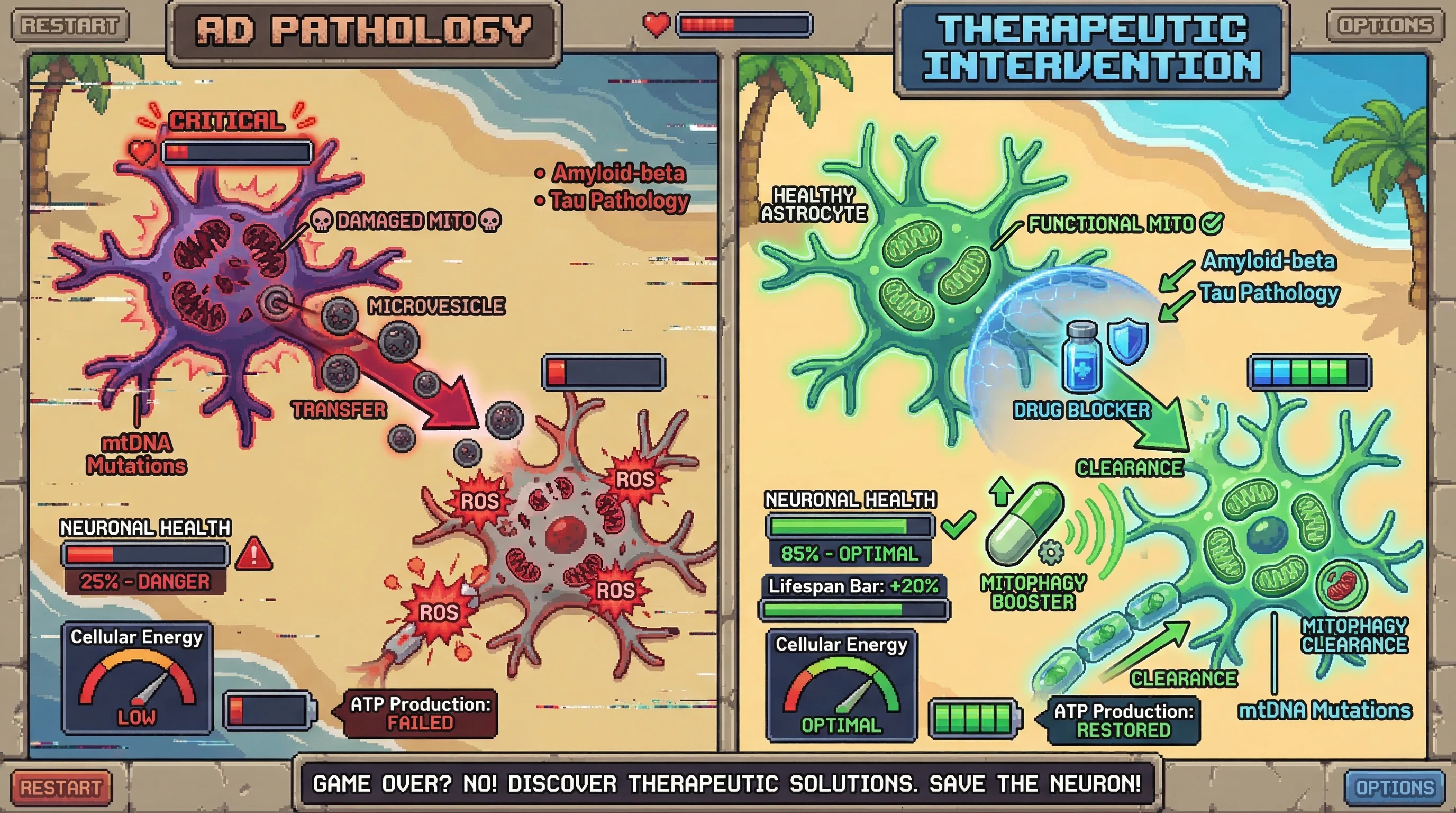
The Core Concept: We traditionally view astrocytes as supportive cells that nourish neurons. This hypothesis flips that assumption proposing astrocytes can transfer damaged mitochondria, hastening neuronal death.
The Mechanism:
Astrocytic Stress: In AD, amyloid-beta and tau pathology affect astrocytes first, compromising their mitochondrial quality control. Damaged mitochondria accumulate with mtDNA mutations and reduced membrane potential.
Packaging for Transfer: Astrocytes encapsulate these dysfunctional mitochondria into microvesicles (ectosomes shed directly from plasma membrane), distinct from exosomes.
Directional Delivery: Via calcium-dependent mechanisms, astrocytes fuse these vesicles with neuronal membranes, depositing faulty mitochondria into neuronal cytoplasm.
Neuronal Overload: Neurons, with high energy demands, cannot easily reject these organelles. The imported mitochondria generate excessive ROS, fail to produce ATP, and trigger mitophagy overwhelming neuronal clearance systems.
Catastrophic Cascade: Resulting energy failure and oxidative stress make neurons more vulnerable to excitotoxicity and amyloid toxicity.
The Twist: Under healthy conditions, astrocytes transfer functional mitochondria to rescue stressed neurons. In AD, this mechanism becomes corrupted bystander effect where pathology spreads through what was once protective.
Therapeutic Implications:
Block microvesicle formation without disrupting healthy transfer
Enhance neuronal mitophagy to clear defective mitochondria
Screen for drugs preserving astrocytic mitochondrial health
This reframes cell-to-cell communication as potential disease vector.