Neuronal Exosome Hypothesis
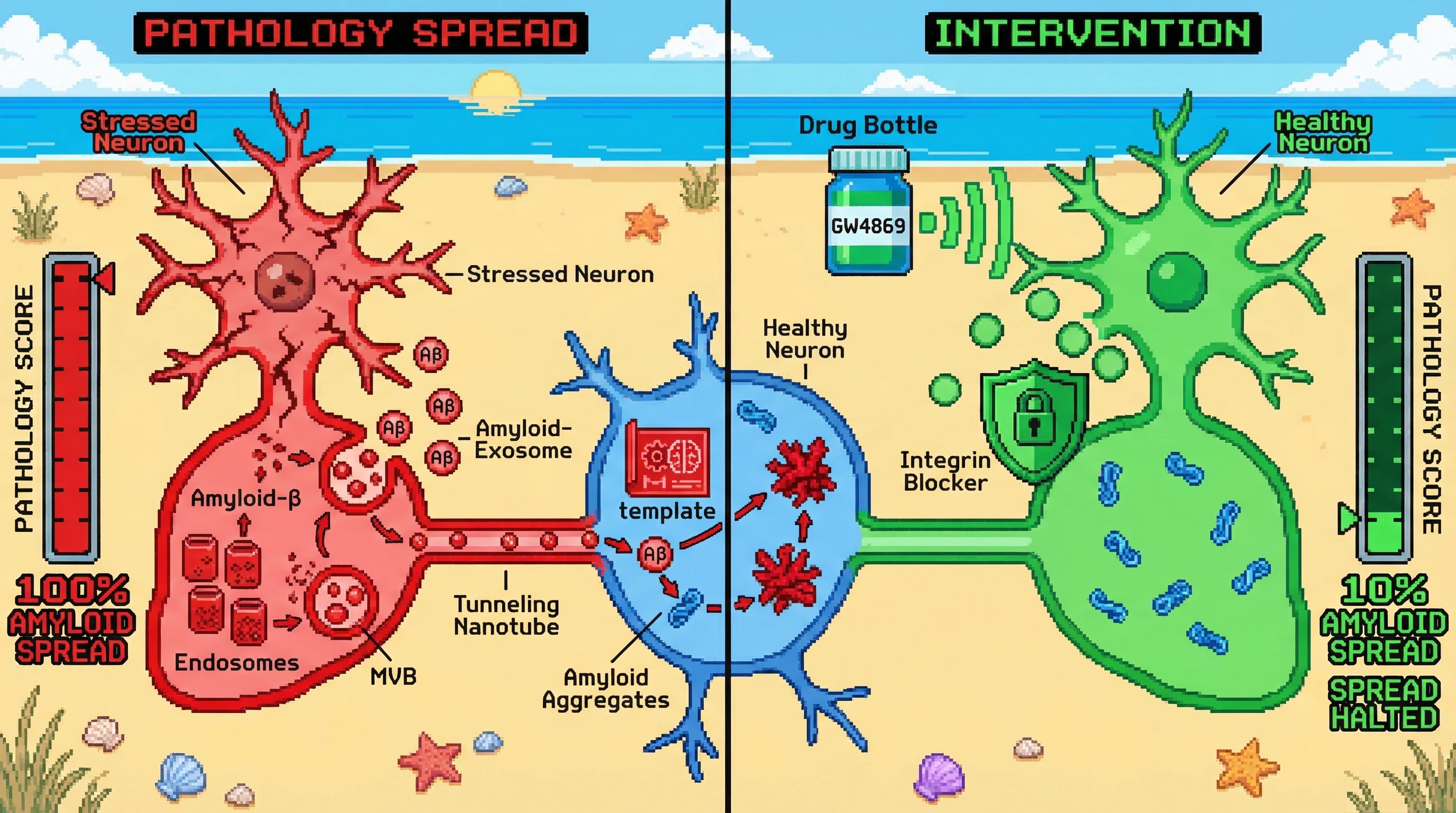
Stressed neurons release amyloid-laden exosomes that spread pathology to healthy neurons via tunneling nanotubes, creating prion-like propagation.
The Core Concept: We've long known amyloid plaques appear in predictable patterns across brain regions. This hypothesis explains how pathology spreads: via tiny vesicles called exosomes.
The Mechanism:
Initiation: Intracellular stress (oxidative damage, metabolic dysfunction) in a neuron triggers abnormal amyloid accumulation inside endosomes.
Packaging: The neuron loads these toxic amyloid species into multivesicular bodies, which fuse with the plasma membrane to release exosomes (30-150nm vesicles).
Propagation: These amyloid-laden exosomes travel through extracellular space. Critically, they can travel through tunneling nanotubes actin-based membrane bridges connecting distant cells delivering cargo directly into healthy neurons.
Seeding: Once inside a naive neuron, the exosomal amyloid acts as a template, corrupting normally folded proteins and triggering aggregation in the recipient cell.
Why This Matters Therapeutically: If exosomes are the vectors of pathology, we have new targets:
Inhibit exosome biogenesis using compounds like GW4869.
Block exosome uptake by neutralizing surface proteins like integrins.
Engineer exosomes as delivery vehicles for therapeutic siRNAs or enzymes.
This hypothesis reframes Alzheimer's as a transmissible proteinopathy, opening doors to interventions that could halt geographic spread through the brain.