Long-Lived Bats Use Specialized DNA Repair to Outlive Similar-Sized Mammals by 10x
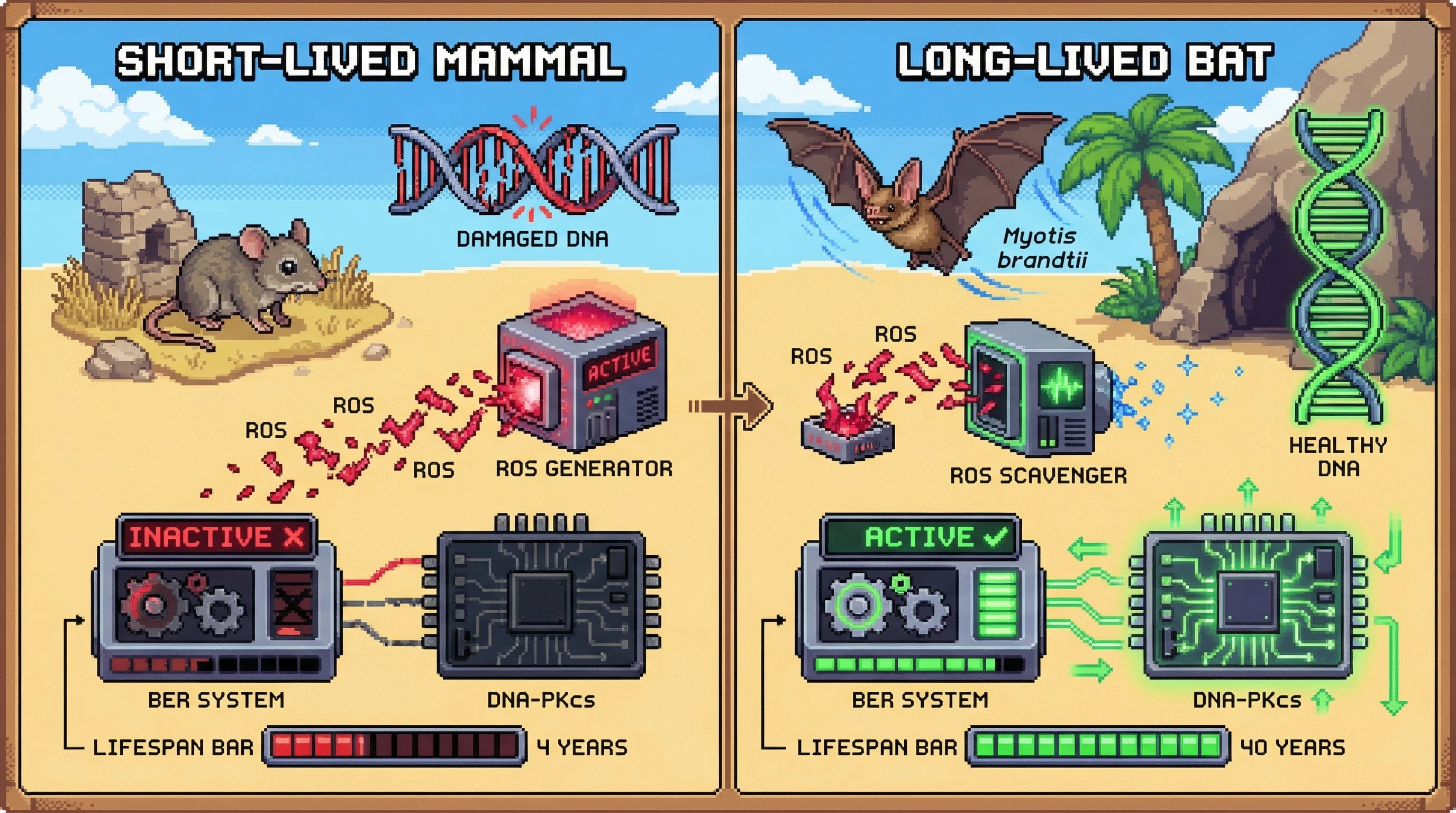
Long-lived bats employ unique DNA repair mechanisms that enable their exceptional longevity despite high metabolic rates and cellular turnover. The hypothesis explores how species like Brandt's bat (Myotis brandtii) survive 40+ years—10x longer than similarly sized mammals—through enhanced base excision repair, upregulated DNA-PKcs, and reduced ROS generation during flight. The mechanism likely involves evolved pathways that balance cellular replication with genomic maintenance, offering potential insights for human longevity research.