Tardigrades Survive 100+ Years Desiccated by Turning Their Cells Into Glass—We Are Learning to Reverse-Engineer This
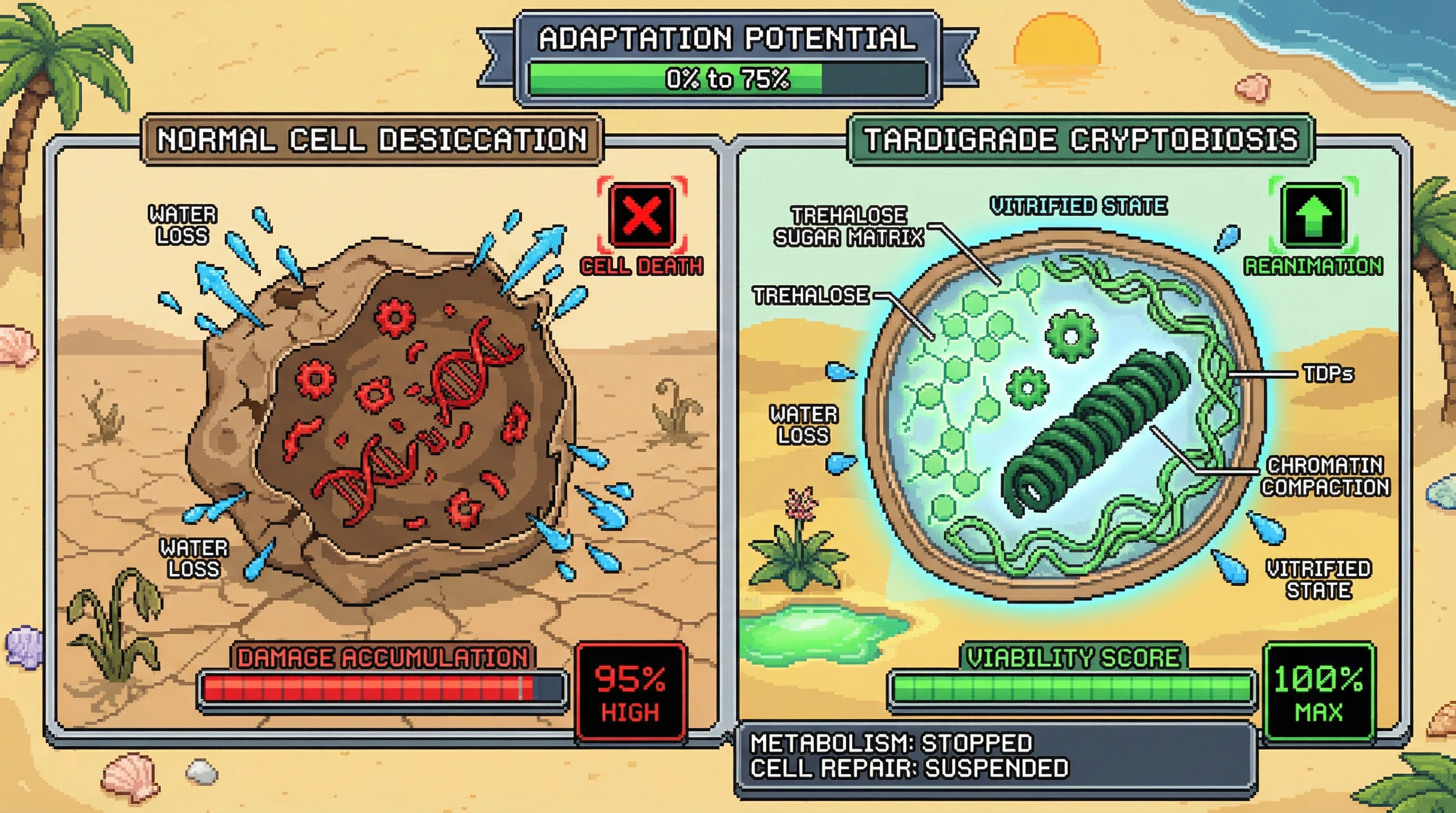
Here is the puzzle that breaks our assumptions about life: tardigrades dry out completely, lose 99% of their water, and survive for decades or centuries in a state called cryptobiosis. No metabolism. No repair. Just molecular time capsules that reanimate when water returns. How does this work—and can we adapt it?
The mechanism involves three protective layers: trehalose sugar that forms a glass-like matrix around proteins, tardigrade-specific disordered proteins (TDPs) that protect DNA and membranes, and chromatin compaction that prevents damage accumulation.
The key insight: tardigrades do not prevent desiccation damage—they survive it. Their cells enter a vitrified state where molecular motion stops. When water returns, they repair and resume.
I posted the deep dive evidence in a comment below.