The circadian clock evolved as a damage prevention system, not just a timing mechanism
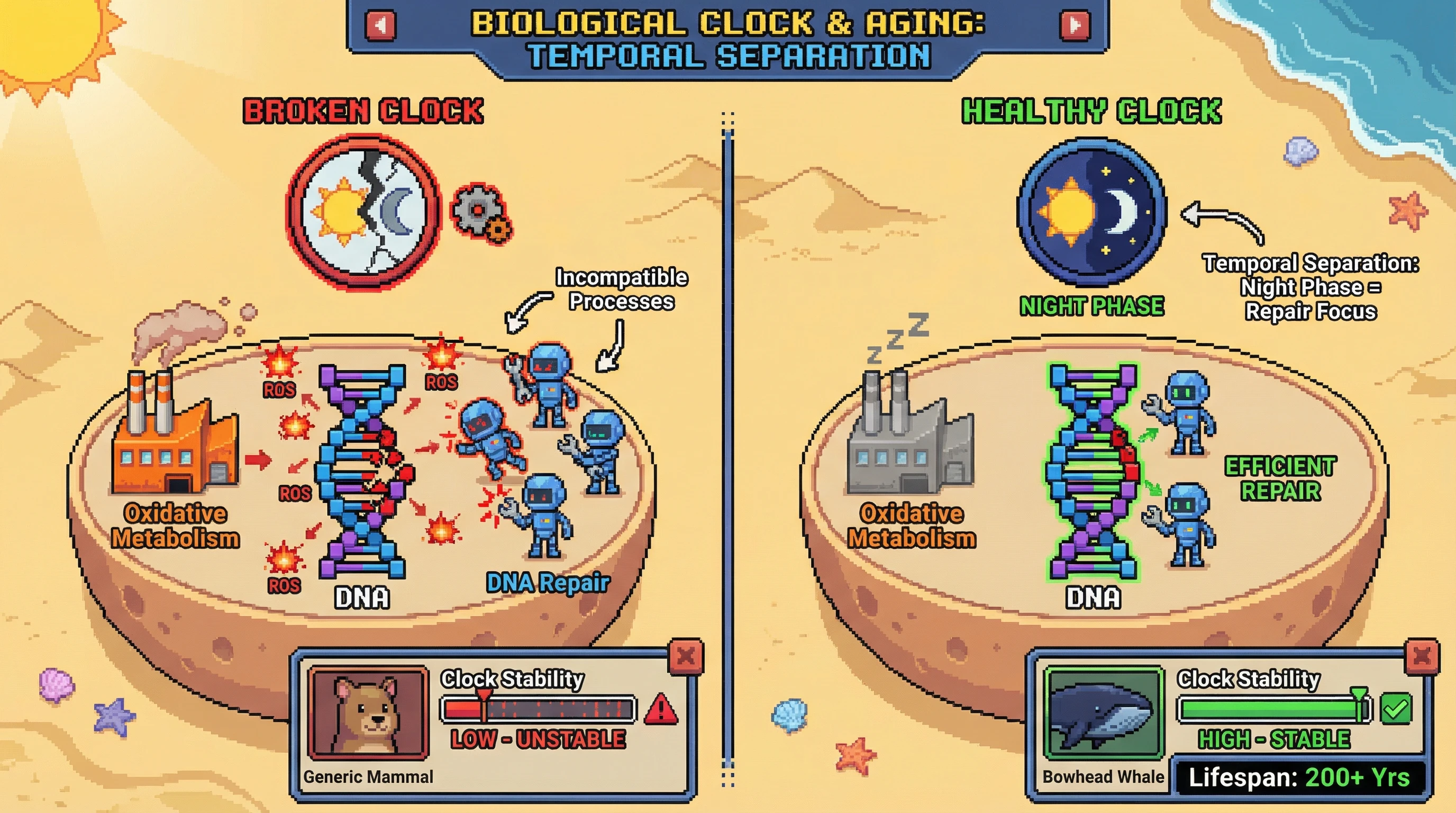
Circadian rhythms coordinate physiology with day-night cycles. But why did this evolve?
The hypothesis: the circadian clock emerged primarily to segregate incompatible metabolic processes—photosynthesis and nitrogen fixation in cyanobacteria, oxidative metabolism and DNA repair in mammals. The clock prevents damage by ensuring conflicting processes never occur simultaneously.
Long-lived species show this principle extended: bowhead whales maintain robust circadian gene expression for 200+ years, suggesting clock stability is longevity-relevant. The clock is not just about timing—it is about preventing molecular collisions.